
Japan, U.S. Broadly Agree on Tokyo's Costs to Host U.S. Troops
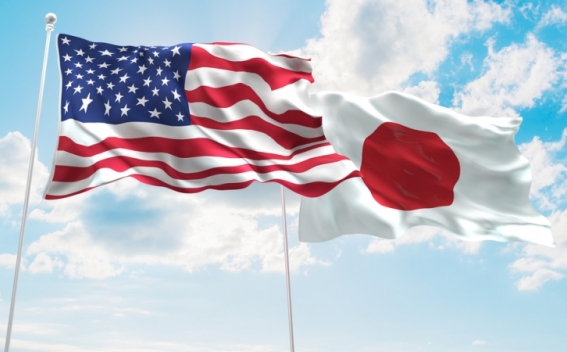
Japan and the United States have broadly agreed to extend by one year the current deal on Tokyo's costs for hosting American troops, Japanese government sources said Wednesday, JapanToday reports.
Under the agreement, Japan will shoulder roughly 200 billion yen ($1.91 billion) in fiscal 2021, around the same level as last year, for the so-called host nation support, they said, adding a formal accord is expected to take place soon.
Talks for cost-sharing for fiscal 2022 and onwards will resume in April later, they said.
The current five-year deal will expire next month.
Tokyo shoulders part of the cost of stationing around 55,000 U.S. military personnel in Japan, including their utility, labor and training expenses, under a bilateral security treaty.
Japan had tentatively earmarked 201.7 billion yen for the initial budget plan for fiscal 2021, about the same amount as the previous year.
Working-level talks on a fresh agreement began in November under former President Donald Trump, who had criticized the alliance as one-sided. Trump had pressured Tokyo to vastly increase its burden, but the talks were put on hold until Joe Biden's administration was inaugurated in January.
Foreign Minister Toshimitsu Motegi, in his first telephone talks with U.S. Secretary of State Antony Blinken in late January, explained Japan's idea of a tentative extension. The plan was proposed by Tokyo during the working-level talks, which resumed on Feb 2 and was held for the first time under Biden.
In the cost-sharing talks for fiscal 2022 and onwards, Japan and the United States are set to discuss their mutual roles in strengthening the alliance, including in new defense fields such as space and cybersecurity.
The Biden administration, with his focus on collaborating with allies to counter China's military rise, may ask Japan to contribute more financially.
Such bilateral cost-sharing negotiations are conducted roughly every five years and are usually concluded by December of the final year of the agreement, so as to time it when Japan compiles its budget plan.
But the latest round was slowed down by the transition from Trump to Biden and the coronavirus pandemic that restricted reciprocal travel by the negotiators.

Read also
-
Phone conversation of the Foreign Minister of Armenia with the U.S. Assistant Secretary of State for European and Eurasian...
-
France, US urge 'immediate' end to Nagorno Karabakh blockade
-
The United States withdrew from sanctions against Syria for six months the provision of assistance after the earthquake
-
Armenia to sign new agreement with US in nuclear energy use
-
White House denies US Navy's involvement in blowing up Nord Stream 2
-
Armenia's Makunts meets with new U.S. senior advisor for Caucasus negotiations
-
Moscow, Tehran Advance Plans for Iranian-Designed Drone Facility in Russia. WSJ
-
US Department of State confirms decision to postpone Blinken’s visit to China
-
 17:08
17:08The regular session of the Anti-corruption Policy Council takes place in Jermuk
-
 15:05
15:05The Prime Minister sends congratulatory messages to the supreme leader of Iran and the President of Iran
-
 11:11
11:11Armenia sends earthquake aid to Turkey
-
 10:43
10:43Commemoration of the Pontiff St. Sahak Partev
-
 09:16
09:16Some roads are closed and difficult to pass in Armenia
-
 19:55
19:55Phone conversation of the Foreign Minister of Armenia with the U.S. Assistant Secretary of State for European and Eurasian Affairs
-
 18:30
18:30Prime Minister Pashinyan and President Khachaturyan meet
-
 18:20
18:20Ararat Mirzoyan with Co-Chairman of the OSCE Minsk Group of France Brice Roquefeuil
-
 17:01
17:01Humans could land on Mars within 10 years, Musk predicts
-
 16:45
16:45France, US urge 'immediate' end to Nagorno Karabakh blockade
-
 16:01
16:01Blockaded Nagorno Karabakh launches fundraiser to support quake-hit Syria
-
 15:59
15:59Earthquake death toll in Turkey rises to 18,342
-
 15:43
15:43Ararat Mirzoyan Held a Telephone Conversation with Sergey Lavrov
-
 15:06
15:06French president rules out fighter jet supplies to Ukraine in near future
-
 14:47
14:475 Day Weather Forecast in Armenia
-
 14:44
14:44President Vahagn Khachaturyan wrote a note in the book of condolences opened in the Embassy of Syria in Armenia
-
 14:20
14:20Azerbaijan’s provocations impede establishment of peace and stability – Armenian FM tells Russian Co-Chair of OSCE MG
-
 12:57
12:57France representation to OSCE: Paris calls on Azerbaijan to restore freedom of movement through Lachin corridor
-
 11:40
11:40Command of Kosovo forces highly appreciated preparation of Armenian peacekeepers
-
 10:16
10:16The United States withdrew from sanctions against Syria for six months the provision of assistance after the earthquake
day
week
month
Humidity: %
Wind: km/h