Unrecognized Countries: the Republic of Nagorno-Karabakh
Unrecognized countries today are a part of our reality. Being the results of unresolved conflicts, they have their impact on the political processes of the world. It is already impossible to ignore their existence and to have these "black holes". The study about the unrecognized states, their peculiarities and their role is already gaining a great importance.
The Republic of Nagorno-Karabakh (The Republic of Artsakh) is an unrecognized country. It declared its independence on September 2, 1991. The Constitution of the Republic of Nagorno-Karabakh (NKR) was adopted on December 10, 2006 as a result of the referendum.
Artsakh is not recognized by any UN member state. Abkhazia, South Ossetia and Moldovan Republic of Transnistria have recognized the independence of NKR, which are partially recognized countries, as well as Australia’s New South Wales state, the Senates and the House of Representatives of the US states- Rhode Island, Massachusetts, Maine, the Senate of Louisiana state and the Regional Council of Fresno, California.
NKR has diplomatic representations in the Republic of Armenia (RA), the Russian Federation (RF), the
The capital of NKR is Stepanakert. Its territory is more than 12 thousand sq km, its population, according to data received from January 1, 2010 is 141.4 thousand. 95% of the population is Armenians, but there are also Russians, Ukrainians, Greeks, Georgians and representatives of other nationalities living in Artakh.
In 387, when
On February 13, 1988 mass protests took place in Stepanakert demanding the unification of NKAO with
Thus mass protests started in
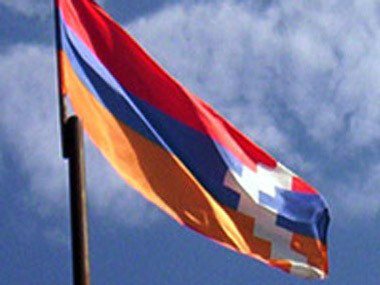 On September 2, 1991 the Proclamation of the
In response, on December 10, 1991, after the break up of the Soviet Union, Nagorno-Karabakh held a referendum, as a result of which the majority of the population voted for full independence from
Consequently a war broke between
Today NKR has control over the former NKAO territory, as well as over the 5 regions and on a part of 2 regions liberated during the war. As a result of war NKR has lost its control over the Armenian populated Shahumian district and parts of Martuni and Martakert districts.
According to some data, the toll from the Armenian side was 4,592-12,000, and from the Azerbaijani side – 25,000-30,000.
In 1992 for the settlement of the Nagorno-Karabakh conflict the OSCE Minsk Group was formed, in the framework of which the negotiations continue.
The negotiation process is based on the final determination of the status of Artsakh, the return of the refugees, the territorial dispute, particularly the fate of the 7 liberated regions and many other questions. NKR, which as a conflict side was participating in the negotiations and in 1994 signed the ceasefire agreement, since 1997 has been left out from the negotiation table and its interests are now presented by
Today the negotiations continue in the framework of the OSCE Minsk Group with the mediation of the co-chairs (