
Unrecognized Countries: the Republic of Nagorno-Karabakh
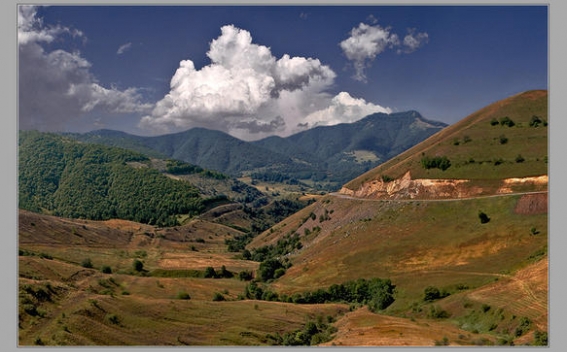
Unrecognized countries today are a part of our reality. Being the results of unresolved conflicts, they have their impact on the political processes of the world. It is already impossible to ignore their existence and to have these "black holes". The study about the unrecognized states, their peculiarities and their role is already gaining a great importance.
The Republic of Nagorno-Karabakh (The Republic of Artsakh) is an unrecognized country. It declared its independence on September 2, 1991. The Constitution of the Republic of Nagorno-Karabakh (NKR) was adopted on December 10, 2006 as a result of the referendum.
Artsakh is not recognized by any UN member state. Abkhazia, South Ossetia and Moldovan Republic of Transnistria have recognized the independence of NKR, which are partially recognized countries, as well as Australia’s New South Wales state, the Senates and the House of Representatives of the US states- Rhode Island, Massachusetts, Maine, the Senate of Louisiana state and the Regional Council of Fresno, California.
NKR has diplomatic representations in the Republic of Armenia (RA), the Russian Federation (RF), the
The capital of NKR is Stepanakert. Its territory is more than 12 thousand sq km, its population, according to data received from January 1, 2010 is 141.4 thousand. 95% of the population is Armenians, but there are also Russians, Ukrainians, Greeks, Georgians and representatives of other nationalities living in Artakh.
In 387, when
On February 13, 1988 mass protests took place in Stepanakert demanding the unification of NKAO with
Thus mass protests started in
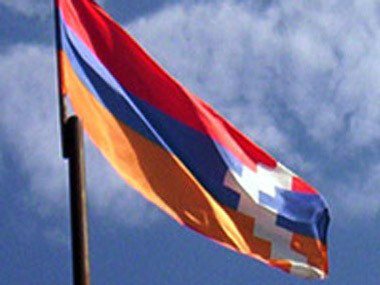 On September 2, 1991 the Proclamation of the
In response, on December 10, 1991, after the break up of the Soviet Union, Nagorno-Karabakh held a referendum, as a result of which the majority of the population voted for full independence from
Consequently a war broke between
Today NKR has control over the former NKAO territory, as well as over the 5 regions and on a part of 2 regions liberated during the war. As a result of war NKR has lost its control over the Armenian populated Shahumian district and parts of Martuni and Martakert districts.
According to some data, the toll from the Armenian side was 4,592-12,000, and from the Azerbaijani side – 25,000-30,000.
In 1992 for the settlement of the Nagorno-Karabakh conflict the OSCE Minsk Group was formed, in the framework of which the negotiations continue.
The negotiation process is based on the final determination of the status of Artsakh, the return of the refugees, the territorial dispute, particularly the fate of the 7 liberated regions and many other questions. NKR, which as a conflict side was participating in the negotiations and in 1994 signed the ceasefire agreement, since 1997 has been left out from the negotiation table and its interests are now presented by
Today the negotiations continue in the framework of the OSCE Minsk Group with the mediation of the co-chairs (
Other materials on this subject
- Russian forces have clearly failed in their duties: senators press Biden Administration to break Azerbaijan’s blockade The United States cannot stand aside while the Aliyev regime callously threatens the lives of Nagorno-Karabakh’s citizens, and must hold Azerbaijan to account for blocking a civilian population’s access...
- US calls for the full restoration of free movement through the Lachin Corridor "We remain concerned about impeded access to the Lachin Corridor and the humanitarian implications of this situation. This sets back the peace process and undermines international confidence. We call for...
- Azerbaijani forces violate the ceasefire in Artsakh The ceasefire violation was reported to the command of the Russian peacekeeping troops.
- Azerbaijani units violate ceasefire in several directions, Artsakh’s Defense Ministry says The Armenian side has no losses. The incidents of ceasefire violations were reported to the command of the Russian peacekeeping troops.
- Russian Diplomat Reassures Armenians Over Corridor In Karabakh "The parties are in direct contact, and I assure you that the peacekeepers will not move a single centimeter until there is a new corridor," Seleznyov said.

-
 17:08
17:08The regular session of the Anti-corruption Policy Council takes place in Jermuk
-
 15:05
15:05The Prime Minister sends congratulatory messages to the supreme leader of Iran and the President of Iran
-
 11:11
11:11Armenia sends earthquake aid to Turkey
-
 10:43
10:43Commemoration of the Pontiff St. Sahak Partev
-
 09:16
09:16Some roads are closed and difficult to pass in Armenia
-
 19:55
19:55Phone conversation of the Foreign Minister of Armenia with the U.S. Assistant Secretary of State for European and Eurasian Affairs
-
 18:30
18:30Prime Minister Pashinyan and President Khachaturyan meet
-
 18:20
18:20Ararat Mirzoyan with Co-Chairman of the OSCE Minsk Group of France Brice Roquefeuil
-
 17:01
17:01Humans could land on Mars within 10 years, Musk predicts
-
 16:45
16:45France, US urge 'immediate' end to Nagorno Karabakh blockade
-
 16:01
16:01Blockaded Nagorno Karabakh launches fundraiser to support quake-hit Syria
-
 15:59
15:59Earthquake death toll in Turkey rises to 18,342
-
 15:43
15:43Ararat Mirzoyan Held a Telephone Conversation with Sergey Lavrov
-
 15:06
15:06French president rules out fighter jet supplies to Ukraine in near future
-
 14:47
14:475 Day Weather Forecast in Armenia
-
 14:44
14:44President Vahagn Khachaturyan wrote a note in the book of condolences opened in the Embassy of Syria in Armenia
-
 14:20
14:20Azerbaijan’s provocations impede establishment of peace and stability – Armenian FM tells Russian Co-Chair of OSCE MG
-
 12:57
12:57France representation to OSCE: Paris calls on Azerbaijan to restore freedom of movement through Lachin corridor
-
 11:40
11:40Command of Kosovo forces highly appreciated preparation of Armenian peacekeepers
-
 10:16
10:16The United States withdrew from sanctions against Syria for six months the provision of assistance after the earthquake
day
week
month
Humidity: %
Wind: km/h